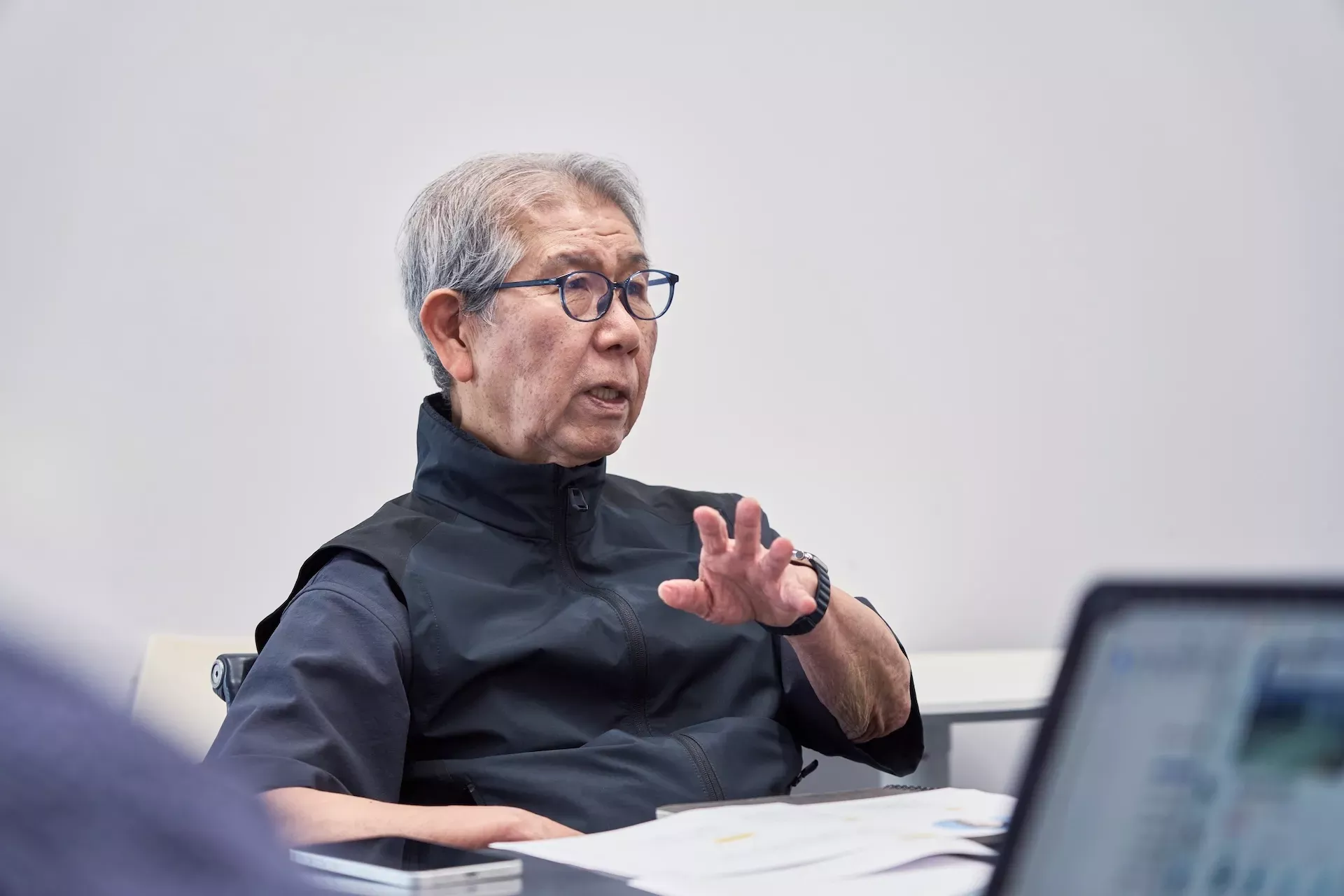
“"The museum belongs to the citizens, and no one else. That's why we made it function as a part of everyday traffic flow."”
A museum that connects the sea and mountains, serving the public.
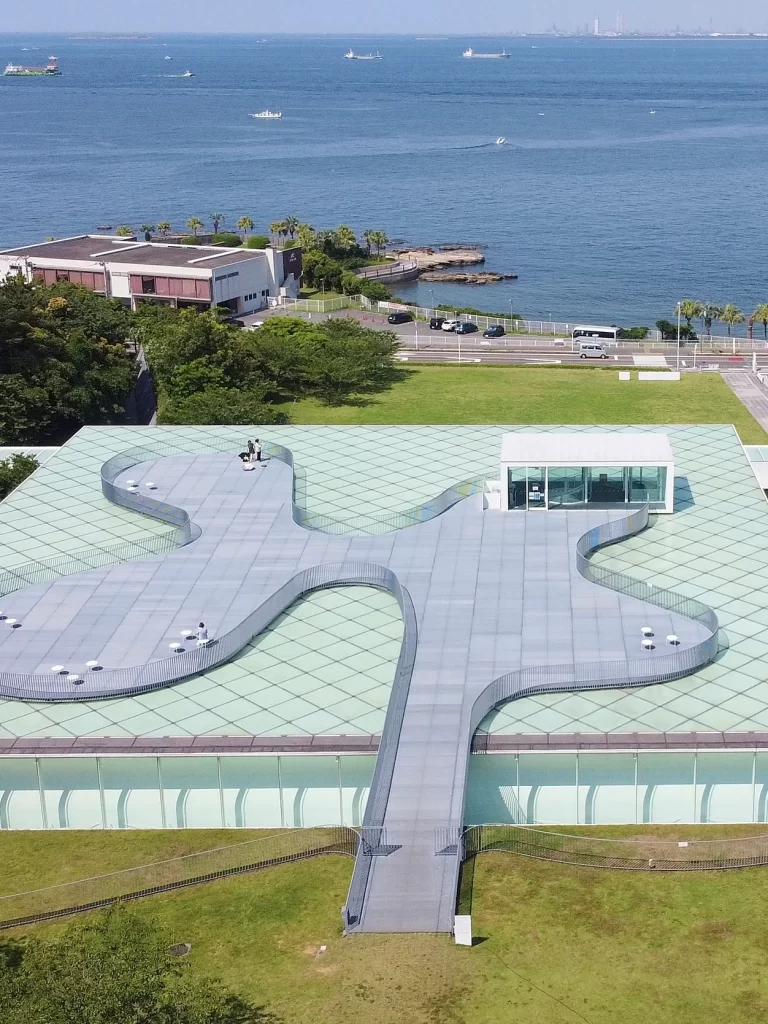
As you navigate the numerous curves along the coast, you'll see the Yokosuka Museum of Art, blending seamlessly into the lush greenery. While surrounded by mountains on three sides, the northeast side is only a few dozen meters from the sea. The architect Riken Yamamoto designed this museum, which blends into the landscape along with the forest and the sea. He explored the boundaries between public and private in architecture. 閾Yamamoto, who calls it "the threshold," emphasizes connections with local communities in the architectural spaces he creates. This is also an idea of inheriting the communication that people have cultivated over long periods of time in each respective area. His design philosophy, which enriches the people who live in and use the buildings, as well as the local community itself, is highly regarded worldwide. What kind of relationship did Yamamoto forge with the sea in the Yokosuka Museum of Art? Yamamoto first recalls that a "slightly unusual competition" was held for the Yokosuka Museum of Art. Unlike typical proposals, participating architects were not asked to submit architectural plans.
It all started with a competition without any blueprints.
"First, about 10 architects were nominated. Then, they were asked to submit an essay. I think the question was something like, 'What kind of museum would you create in Yokosuka, a city with both the sea and mountains?' Sketches were allowed, but no blueprints. Three architects were selected from the nominated participants, and the judges went to see the architects' actual work. Of the three, I was the only one who had no experience designing a museum. So, the judges visited 'Hakodate Future University'."
Yamamoto's representative work, which also won the Architectural Institute of Japan Award, is a learning space that incorporates tiered spaces within a vast area. He reflects that he saw a new possibility for art museums in a space that encourages free and lively communication between students and professors. He also continues that Yokosuka City probably wanted the designer to engage in dialogue with the city and various other people. Thus, Yamamoto was nominated and began the design from scratch. In the design process, Yamamoto and the staff of his design office, the city's art museum preparation office, the architecture department and the facilities department, and sometimes experts from various fields as guests, held meetings twice a month to proceed with the design. To first understand the site well, Yamamoto had the opportunity to view the site from the sea on a yacht owned by Yokosuka City.
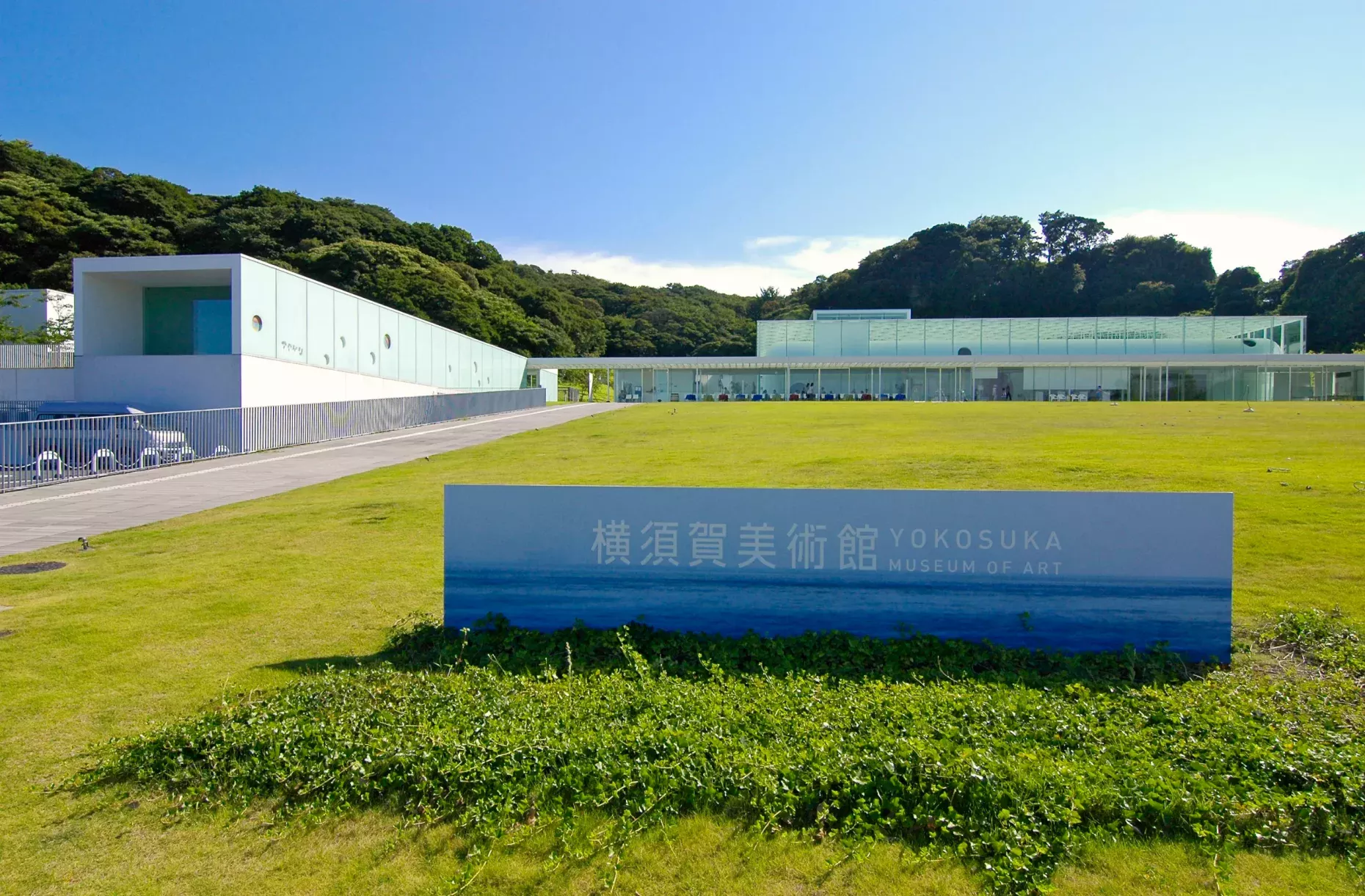
Blending into the beautiful scenery of Uraga Channel
"From the sea, all you see is blue and green, making for a truly beautiful landscape. It faces the Uraga Channel, sandwiched between the Miura Peninsula and the Boso Peninsula, and is known as the narrowest and most treacherous section of Tokyo Bay. It has also been a strategic point for protecting castles since the Edo period. The Meiji government established a naval base there, and after World War II, the US military set up a base there as well. Huge US aircraft carriers and submarines pass through, as do Japanese Self-Defense Forces submarines. Of course, many other ships also pass through, making it a rare place in the world."
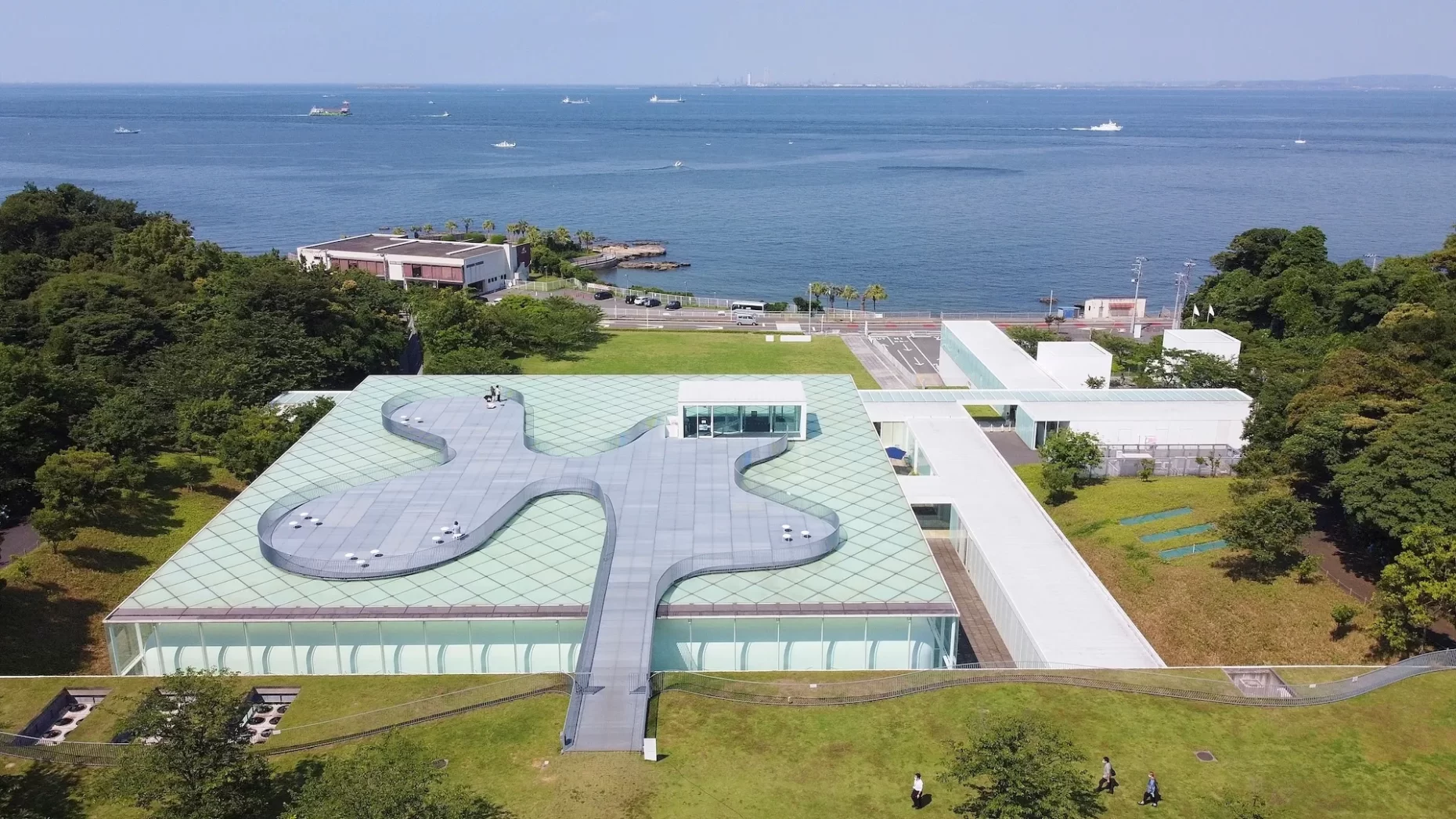
Because the museum stands on this land, we wanted to prioritize the view of the sea and ships. Although it is a museum, we first considered the restaurant overlooking the Uraga Channel. We positioned the restaurant facing the sea, while burying most of the museum's functions underground. We kept the building low because there is wonderful greenery behind it. Because it was a strategically important military location, ordinary people did not enter, leaving the forest untouched. Standing on the road facing the sea, the building is located at the back of a gentle slope. The low-rise building blends into the forest while also serving as protection against salt damage. On the other hand, approaching from the mountain side, you are invited to the rooftop plaza as if you were strolling through a park. After enjoying the view of the sea, your feet will naturally lead you to the building.
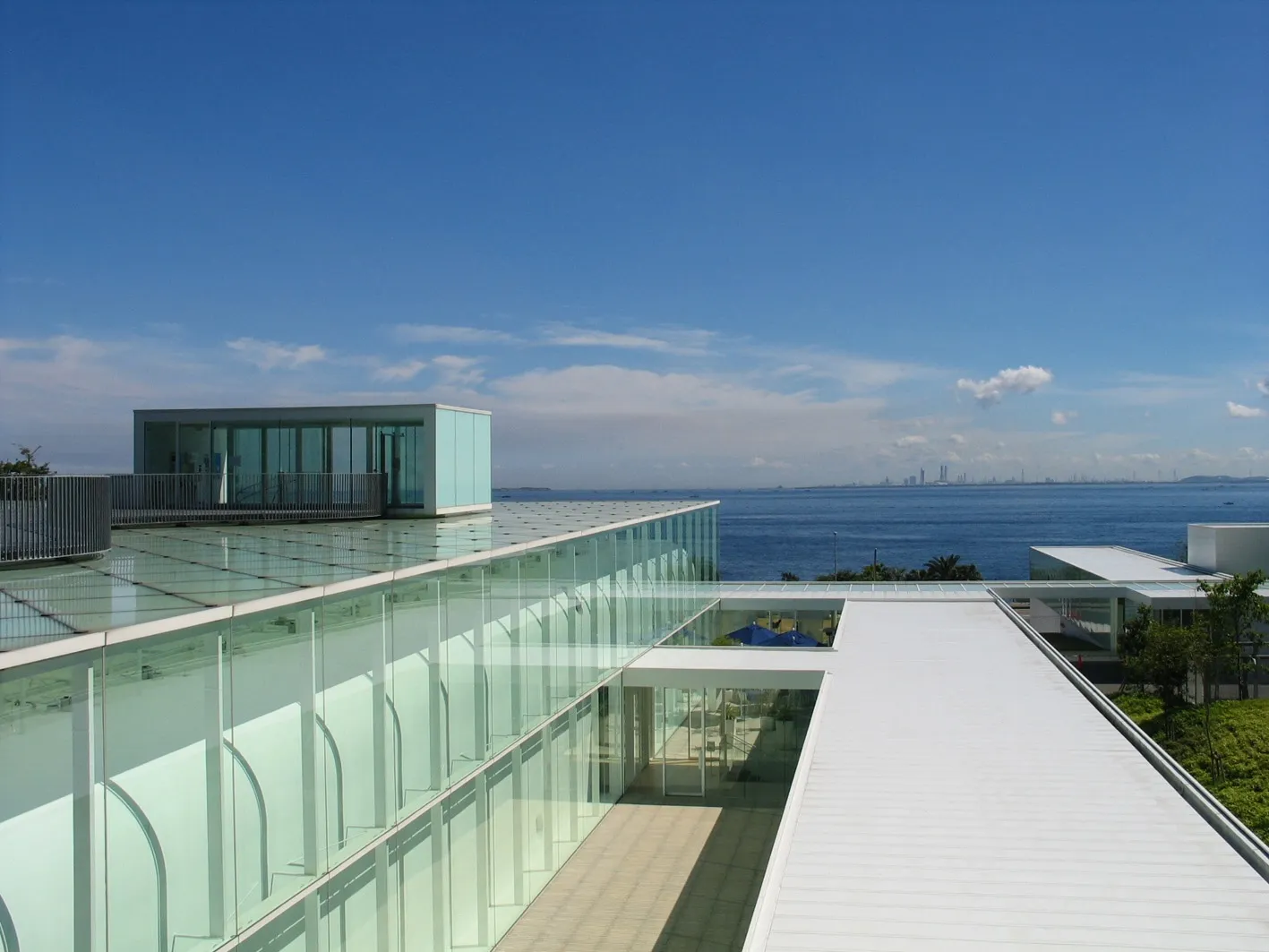
"Because the land has varying elevations, we installed an elevator that everyone can use as a link between the sea and the mountains. In addition to viewing exhibitions, visitors can enjoy many functions on a daily basis free of charge. We considered various aspects, including management, by integrating it with the park. The museum belongs to the citizens and no one else. The Yokosuka city officials took this very seriously and provided a lot of advice during the design process. Kanagawa Prefecture has a history of establishing one of the first modern art museums after the war. I remember one of the people involved telling me that we didn't need to be so careful when designing the museum. The Kanagawa Prefectural Museum of Modern Art (now the Kamakura Bunkakan), designed by Junzo Sakakura, is a wonderful building, but it has aspects that make it difficult to say that it is suitable for art exhibitions because it is a space where a lot of natural light comes in. They somehow managed to make use of it. In fact, there are many museums overseas that incorporate natural light. I also feel that there is a problem with how closed off Japanese museums are."
A charming port town that preserves its way of life and culture
Yamamoto also points out that post-war Japanese policies have destroyed much of the natural environment. The sea is one of the victims. Much of the coastline of Yokohama, where Yamamoto grew up, has been turned into industrial complexes and reclaimed land. He says that various thoughts come to mind when he travels from Yokohama to Yokosuka. The area below the cliffs of Sankeien Garden was once a sandy beach, and memories of clam digging there come flooding back. There are still some rich landscapes, but the entire coastline has been filled in with concrete.
"After the war, the entire coastline was transformed into a place for profit. Mountains were leveled to create residential areas, and the excavated soil was used to extend the coastline further and further. Fishing ports are not only vital centers of life, but also places with the potential to become important tourist destinations. In Europe, particularly in Italy, many fishing ports have become popular tourist destinations and vacation home areas. People don't just visit for short periods; they stay as if they were living there. That's why they interact with the local community and economic activity is revitalized. Above all, people are drawn to the scenery of the fishing ports and visit, so the memory of the land is also passed down. Japan, however, dismantled and developed all of that. In Italy and Greece, you can see beautiful and pleasant residential areas spreading out on the slopes. It's about the relationship between the port and housing. All port towns have developed by considering how to maintain a relationship with the port while living comfortably. In recent years, the coasts of Tohoku and Noto have suffered great damage from earthquakes. In Japan, it would be good to create forests close to the coast in anticipation of tsunamis. Of course, necessary evacuation routes must be prepared, but if amenity facilities such as sports stadiums and restaurants are built there, fishing ports will flourish once again."
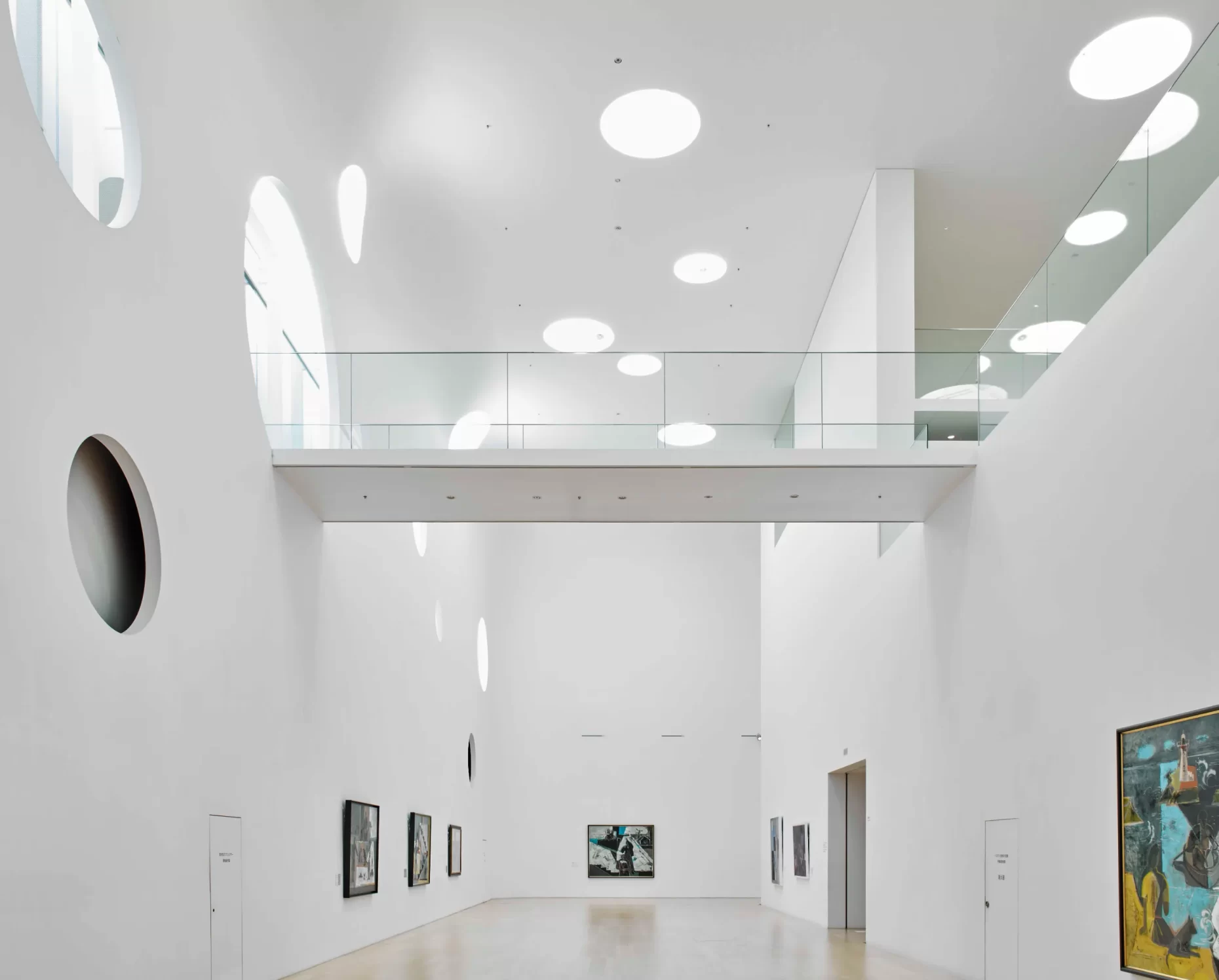
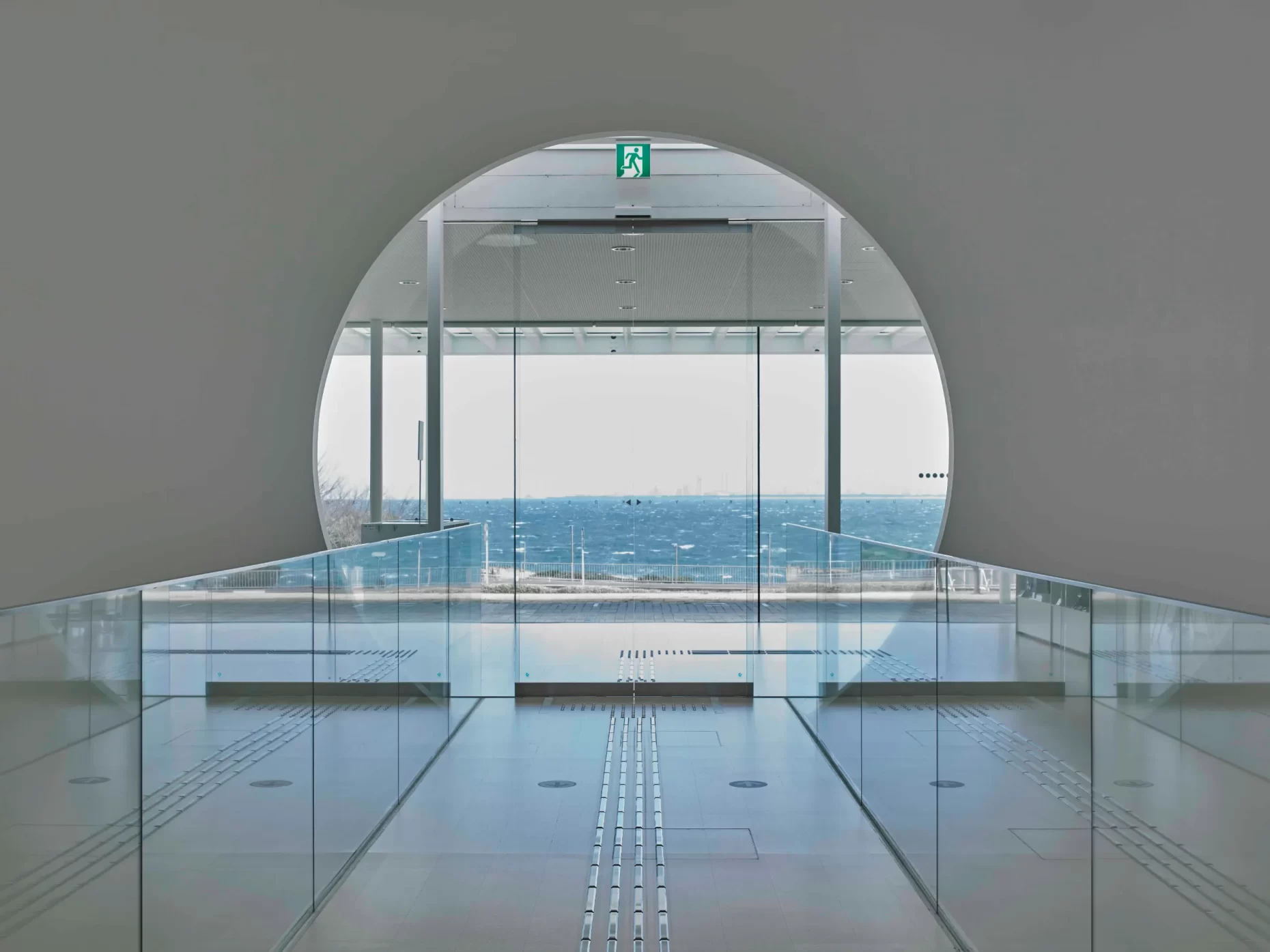
Yamamoto says that architects have a variety of options. He continues that architects must create beautiful things. The exhibition building of the Yokosuka Museum of Art is covered with a double skin of glass and steel plates. Glass, which increases the freedom of openings, is a material that is less susceptible to rust from salt damage and deterioration over time. Another box made of welded steel plates is placed inside this glass box. The steel plates have holes of various sizes.piercing Therefore, the amount of light taken in is adjusted according to the purpose of each room. Natural light is incorporated into the entrance hall and the atrium gallery, while exhibition rooms combine spaces that are shaded with spaces that allow natural light. If you're lucky, you might see a ship through the porthole. Yamamoto says that gazing at the Uraga Channel makes you think about the future of Tokyo Bay. How should the relationship between the sea and humanity, and between the sea and architecture, be?
Sustainable coastlines are essential for humankind.
"Civilization arose when humans began to live near the sea and rivers. In that sense, it can be said to be our root. On the other hand, the sea is an extremely ferocious force. Tsunamis and storms come from the sea. That is why people have lived near the sea with the understanding that it is a terrifying force. Nature, in other words, is something that humans cannot control. It is difficult to become close to the sea without knowing its dangers. After the Great East Japan Earthquake, Japan built large seawalls, but I personally think it is foolish to try to resist the sea with the existence of such structures. With the population declining, there is also the question of whether highly urbanized coastlines are really necessary. Tokyo, in particular, is exploiting its coastline and building apartments one after another. So, how should we confront the sea? It is very simple: we should think about it together with people who have long made their living from the sea. Thinking with people who know very well that it is inseparable from their lives. That is essential for sustainable coastlines."
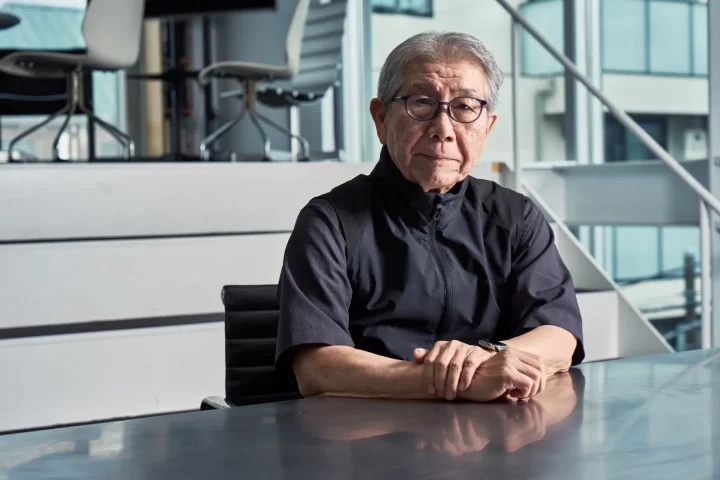
Riken Yamamoto
Born in Beijing in 1945. Graduated from Tokyo University of the Arts Graduate School in 1971. Established Riken Yamamoto & Associates in 1973. He works on a wide range of projects, from private residences and apartment buildings to public facilities such as schools and art museums, and continues to explore the relationship between "public" and "private" spaces, and the connection between local communities and people, through his architecture. Representative works include Saitama Prefectural University, Future University Hakodate, and Yokosuka Museum of Art. He received the Pritzker Prize for Architecture in 2024.
https://www.riken-yamamoto.co.jp/