
Listening to "The Future of the Sea" Vol.5
Subodh Kerkar
Performance art at the water's edge: 'Mirrors'
Subodh Kerkar is an artist from Goa, one of India's leading beach resorts on the west coast. He calls himself a "marine artist," and we spoke to him about his work, which mainly consists of performance installations at the water's edge. When asked about the "future of the ocean," he immediately answered "responsibility."
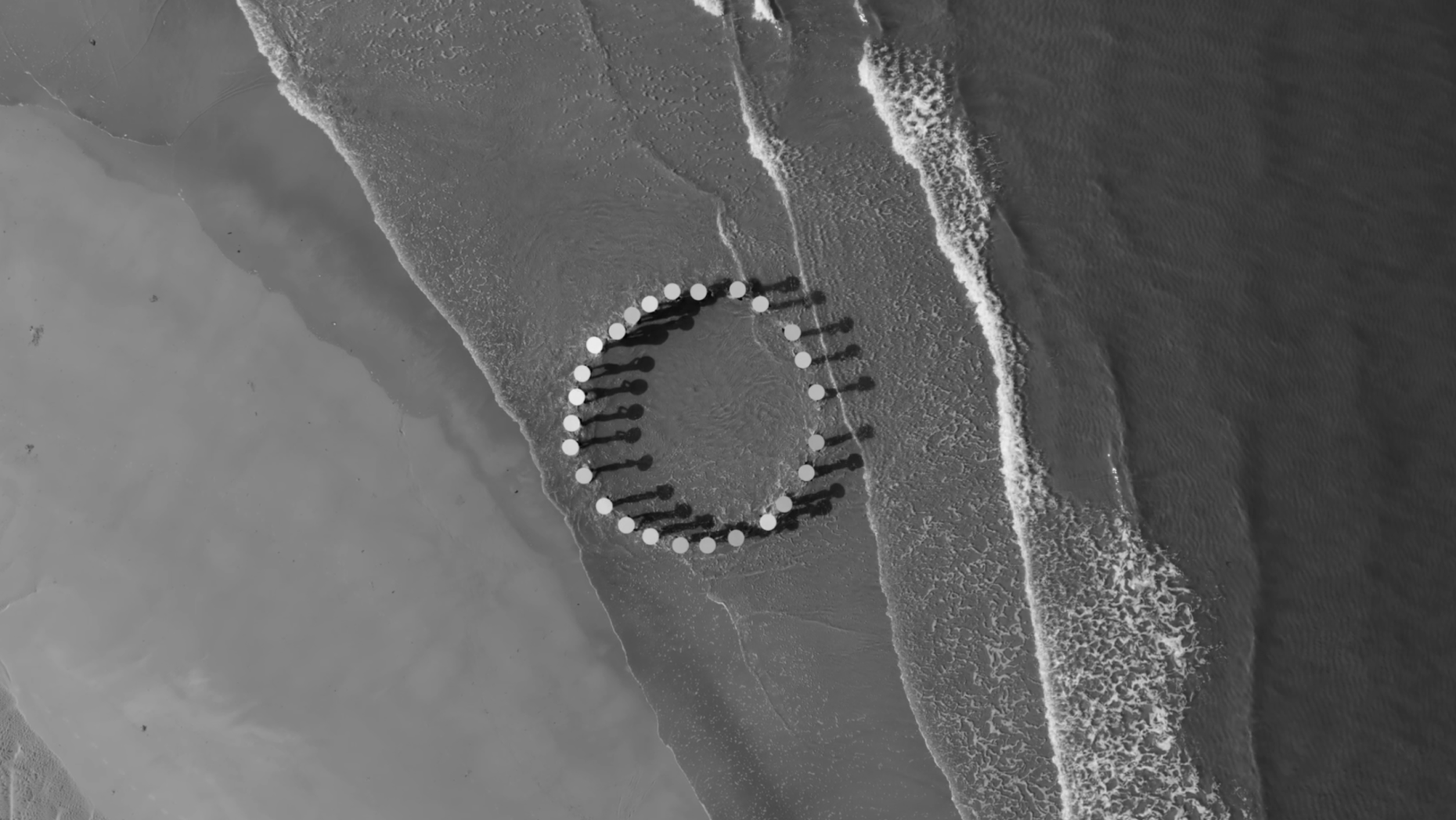
The performance installation series advocated by Suboad himself consists of land art-like works set on the shoreline. Performers carry out performances directed by Suboad on the beach, and these are filmed from above.
"One day when I went to the beach, I noticed the sky reflected in a mirror lying on the shore. To prevent anyone from getting hurt, I picked it up and threw it in a nearby trash can. At that moment, the idea of creating art using mirrors suddenly came to me," he says, explaining the inspiration for his work "Mirrors."
Subod says that as a child, especially during the monsoon season, he would visit the beach early in the morning, trying to find treasures washed ashore by the sea. He says that these visits taught him to find beauty in everyday objects. Since childhood, Subod has carefully observed things lying on the beach and used them as artwork. Small incidents he encounters while walking along the shore have led to performances that involve many people.
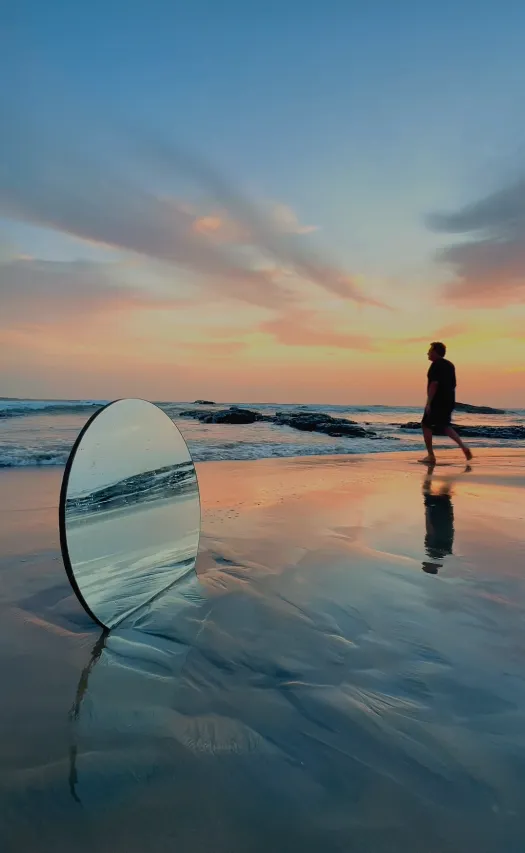
The mirrors used in "Mirrors" were made by attaching acrylic mirrors to plywood, and a special handle was installed at the bottom of the plywood to allow participants to handle them stably. The performances instructed by the participants were filmed using a drone, and this fantastical work was completed.
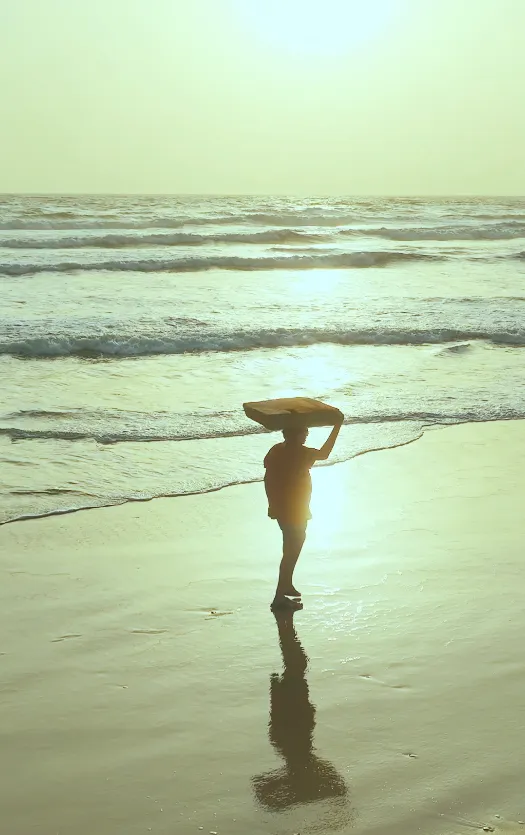
"In my work, I often fix mirrors to the waterline or beach. The mirrors reflect the sea, creating surreal images. The men in my work who walk around with mirrors on their heads can be seen as carrying the sky and the sea in a sense," Subod says.
Multiple people, each holding a mirror on their head, undulate and draw circles along the shoreline in a steady rhythm. The performance, which resembles a single living organism, instantly captivates the viewer. Something is stirring beneath the vast sky and sea. It seems to symbolize all life on Earth.
Humankind moved onto land, carrying with them elements of the sea.
"I position myself as a 'marine artist.' Human civilization was born in the womb of the sea. In fact, life itself originates in the ocean. As animals moved from the sea to land and eventually evolved into Homo sapiens, they carried a small amount of marine elements with them. That's why the ratio of sodium, potassium, and calcium in seawater is very similar to the ratio in human blood," Subord says. He explains that organisms that originated in the sea have evolved to become us today.
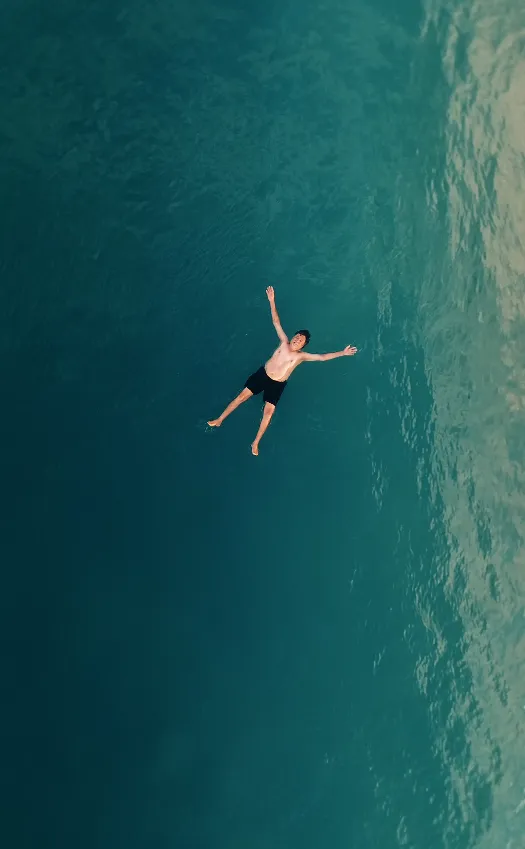
"The ocean is not only a source of food and minerals, but also the creator of civilization. The world's oceans divided continents, but paradoxically, they also played a role in connecting them."
The fisherman is keenly aware of the changes in the sea and approaches fishing as if trying to understand the ocean's thoughts. He has faced both its terror and its richness while feeling a sense of oneness with the sea. The fisherman catches fish, and Suboad creates art. For him, creation was a very natural response to the sea.
"The ocean will forever be of vital importance to humankind. We must not forget that more than 50% of the oxygen that sustains life on Earth is produced by marine phytoplankton. Humanity must take a more responsible view of the ocean and implement measures to prevent marine pollution. Some predict that the weight of plastic in the ocean may exceed the weight of fish by 2050. The ocean must be respected, cherished, and protected."
With a deep love for the ocean, Suboad has continued to raise awareness about the marine environment through a wide range of expressive methods, from performance art to painting and crafts. His pioneering work as both an artist and activist is currently attracting attention from around the world through social media. Last year, when Suboad spoke at a TED talk event, he spoke about how art is a tool for understanding people and society, and the importance of having an attitude that understands the way the world is shaped by the complex interplay of history, politics, and culture, which garnered a great deal of attention.
The history of human civilization is intertwined with the ocean.
"The sea is my teacher and my muse. The history of human civilization is intertwined with the sea. The ocean water has experienced everything from the very beginning of creation. It reminds me of the beautiful poems of the great Indian poet, Rabindranath Tagore..."
Finally, when asked what the sea means to him, he replied with the following poem.
The water in the glass is sparkling and clear.
The water in a glass is sparkling and clear.
The ocean water is dark and deep.
The water in the ocean is dark and deep.
Small truths are easy to understand.
Small truths are easy to understand.
Great truths are accompanied by great silence.
Great truths have great silence.
What moves us so deeply about his work, which has consistently questioned our "responsibility to the ocean," may be that, even before considering the message, it profoundly embodies the memories of humanity's journey alongside the sea. Suboad, the founder and director of a private art museum in his hometown of Goa, makes us realize that we ourselves are part of the vast ocean by contemplating the invisible cycles of nature and the origins of life that began in the sea. From there, he quietly asks us about our responsibility and hope for a future in which we live in harmony with the ocean.
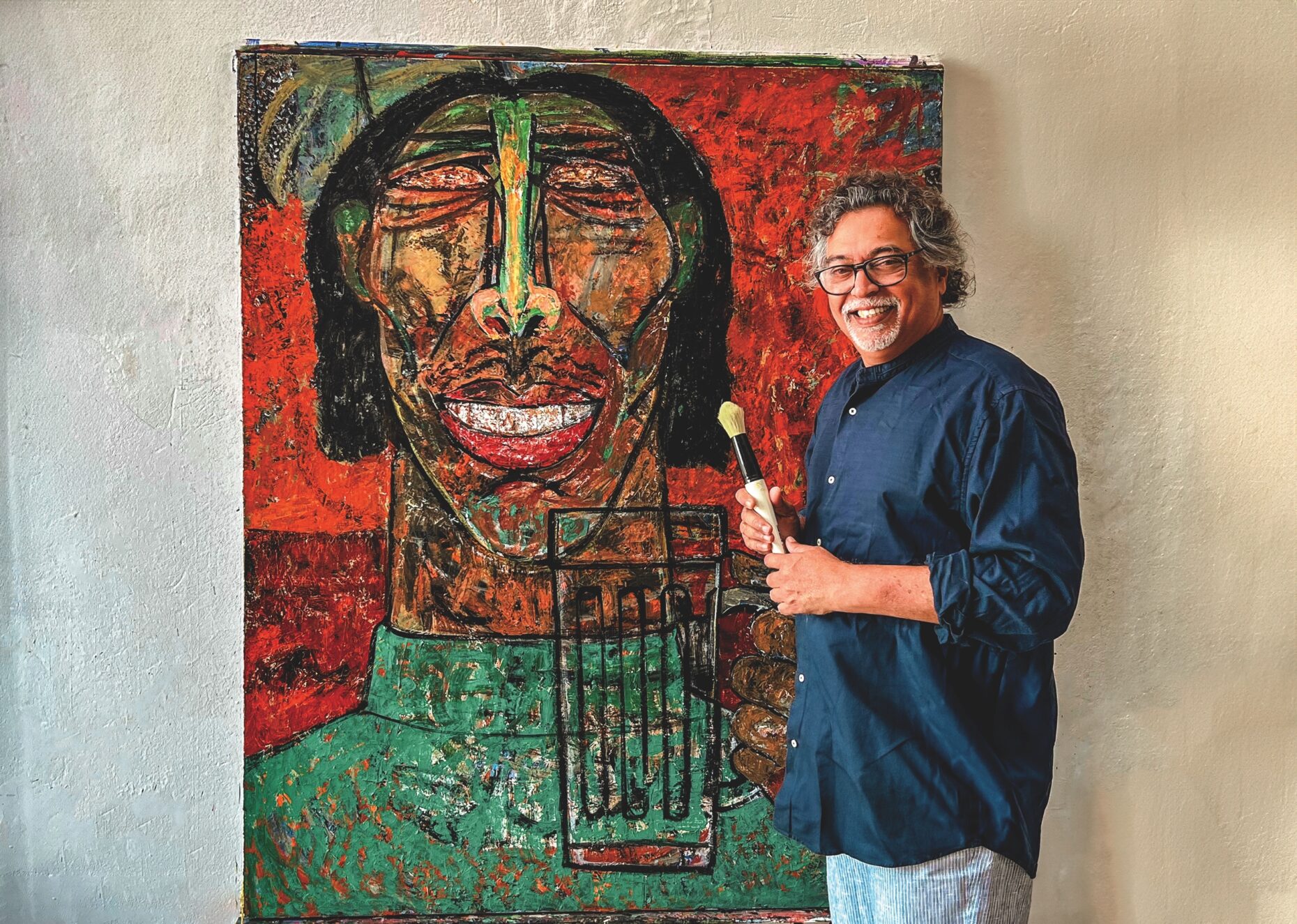
Subodh Kerkar
Born in Goa on India's west coast in 1959, he was a qualified dentist but pursued a career in art in 1990. He has established a unique position in the fields of conceptual art, land art, and performance art. He is the founding director of the Goa Museum of Contemporary Art (MOG), one of India's largest privately owned contemporary art spaces.
HP: subodhkerkar.com
IG:@subodhkerkar
FB:@subodh.kerkar
YouTube:@Subodhkerkar