
Listening to "The Future of the Sea" Vol.3
Takashi Kokubo (environmental musician, sound designer)
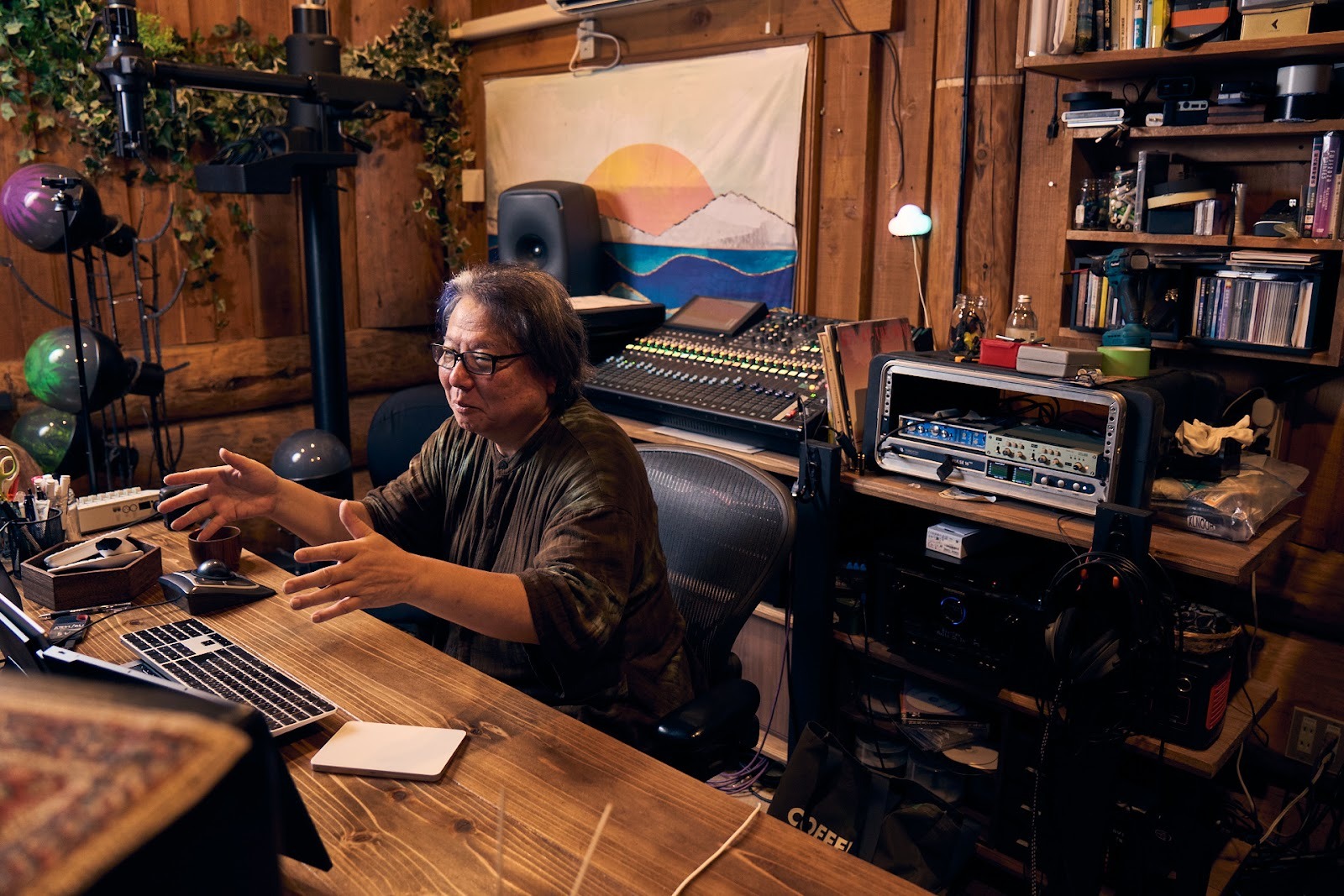
A journey to record the world African beach resorts
Takashi Kokubo is known for his sound design work, including the alarm sounds for earthquake early warnings and the signature sounds for the electronic money service "iD," while also being recognized as an "environmental musician" whose style incorporates the natural sounds of mountains, rivers, and the sea. Since the 1980s, he has frequently traveled to various countries around the world to record natural sounds, and he says, "No matter which country I go to, my standard route is to start by recording in hills and mountains where there is a wide variety of sounds, such as animal calls, and finally end up in a town by the sea."
"For example, when I spent about two weeks in the savanna of Kenya, Africa, the capital Nairobi is located in the highlands and doesn't really evoke an image of the sea, but if you head east, you'll find plenty of beach resorts on the Indian Ocean. I stayed in a tent and traveled around the savanna, including the Maasai Mara National Reserve, patiently recording the sounds of lions, hippos, and birds. Finally, I went to a coastal town on the Indian Ocean and relaxed, treating myself as a reward. For me, the sea is a source of healing."
A roaring sound echoes across the island of Fiji Generator noise
However, when trying to record the sounds of the ocean, unexpected obstacles can sometimes be encountered.
"When I visited Matamanoa Island in Fiji in the 1990s, it was a resort with fewer than 10 cottages. But electricity is necessary for tourists, so oil-fired generators were running constantly, and you could hear a 'roaring' sound wherever you went on the island. Even a photographer can't take the picture they want if there's a telephone pole in the way, right? It's the same thing; even if I think, 'The sound of the waves over there is nice,' or 'The song of this bird is nice,' if the generator is making noise, I can't record it either."
Kokubo asked the hotel manager, "I'll pay you to turn off this generator for just 30 minutes," but was naturally refused. However, Kokubo did not give up.
"As I stayed there, I started to figure out the times when the generator noise wasn't too loud, and I realized that if there was a hill between the generator and the recording location, the impact would be minimized. I managed to find the right spot and record the sound of the ocean."

Only the sound of waves I can't record it.
Kokubo says he still visits various parts of the world about three times a year to make recordings. In the midst of all this, he says, "As economies develop all over the world, there are more and more cases where artificial sounds get mixed in when we try to record the sound of waves," and he reflects on how rare it is to find oceans where only natural sounds can be heard.
"We call the sounds of untouched nature, free from artificial noises like car sounds and machine noises, 'natural quiet.' In Japanese, it means 'the stillness of nature.' These kinds of ocean environments are rapidly disappearing, but this is the kind of ocean I want to preserve for the future. That's why I travel to different countries every year to record and preserve these sounds."
The text also touches upon the idea that life on Earth originated in the ocean approximately 4 billion years ago and evolved into humans by moving to hills.
"I think that humans have a yearning for the sea ingrained in their DNA. Just gazing at the ocean gives me a sense of gradually rediscovering myself. It's more than just healing; it's like discovering my true self. By becoming one with the sea, or to put it more broadly, becoming one with the Earth, I feel like I'm beginning to understand who I really am. When I'm recording surrounded by the sounds of nature, I sometimes have moments of realization like, 'This is the kind of person I am,' and it feels like I'm on a journey of self-discovery."
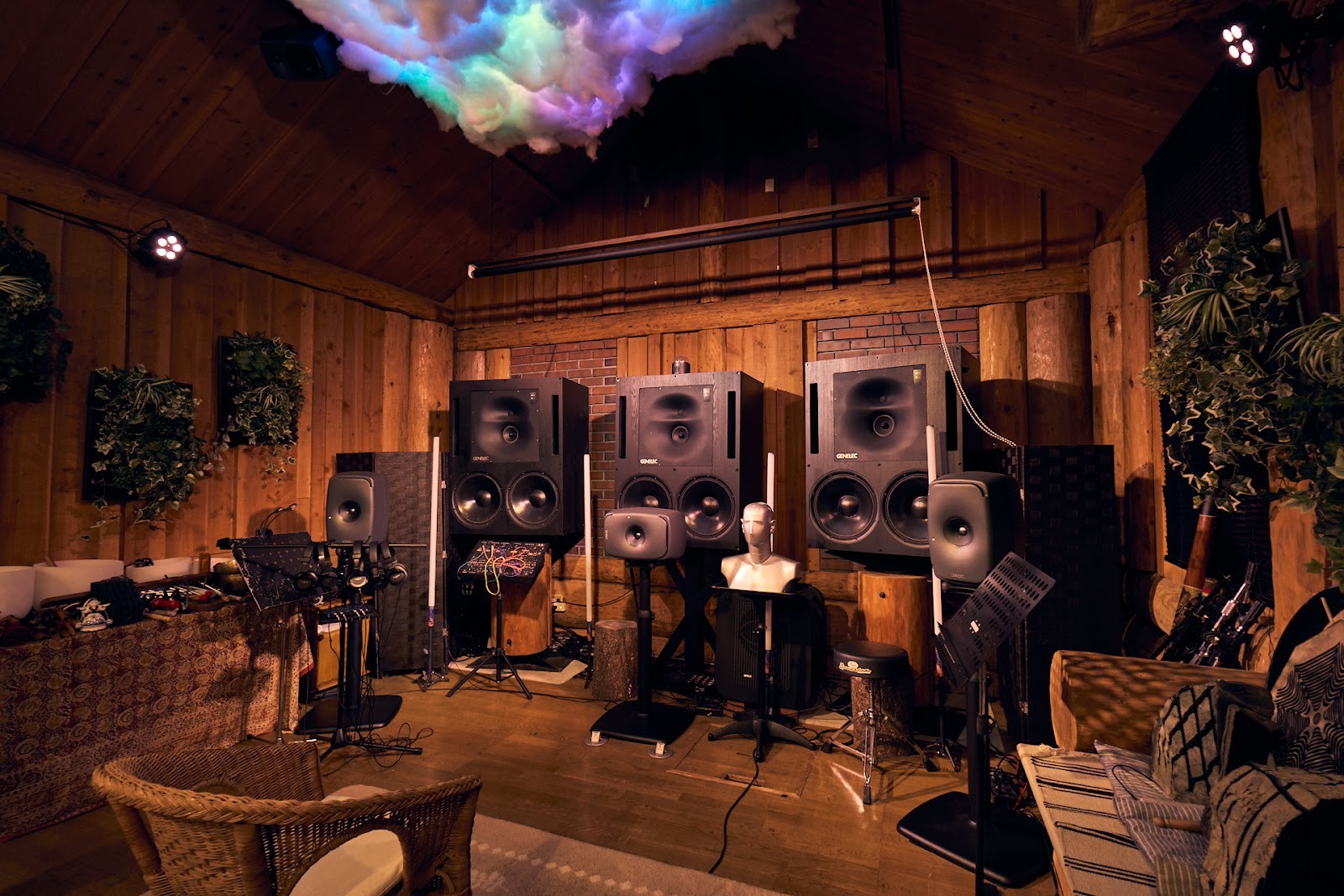
urban dwellers It's always noisy.
On the other hand, cities are full of noise. There is traffic noise from cars and trains, sounds and vibrations from construction work, the voices of advertisements and announcements, and the sounds of busy neighbors' lives, but Kokubo says, "City dwellers tend to breathe shallowly and are constantly on edge. The first thing to do is to bring yourself to a state of quietness."
"In the music classes I teach at the Open University of Japan, we have a session called 'Listening Carefully.' I ask students to 'Be quiet for five minutes, making no noise, and try to jot down any sounds they hear.' Our senses are dulled, so at first they can't even distinguish ten sounds, but I tell them, 'Be even quieter. Try to keep sounds like the rustling of clothes or the sound of a pencil writing as quiet as possible, and listen carefully,' and ask them to try again. Then they start noticing artificial sounds they normally wouldn't pay attention to, such as 'I heard the sound of a fluorescent light,' or some people even say, 'I heard the sound of my own heartbeat.'"

Kokubo likened this to a "water mirror," saying, "When the water is moving, the surface doesn't become a mirror, but when there is no wind, the surface reflects us like a mirror," and he reiterated the importance of natural quietness.
"I ask them to categorize the sounds they've noted down, classifying artificial sounds as A and natural sounds as B. Then, I ask them to calculate the 'natural quietness level' based on the proportion of B sounds to the total sound. In classrooms at the Open University of Japan, artificial sounds make up almost the entirety, with natural sounds accounting for only about 10%. After they understand this reality, I ask them to 'try to find a place where the natural quietness level is 100%.' When they develop this kind of awareness, their perception of the environment changes dramatically, even when they're traveling."
Have you ever experienced "natural tranquility" in any of the oceans you've visited so far?

Montego Bay, Jamaica The "silence" of the sound of waves”
Finally, we asked Mr. Kokubo, who has observed numerous seas from a sonic perspective over many years, about the seas that have left the biggest impression on him.
"As a 'wave sound critic,' the best wave sounds are those at Montego Bay in Jamaica. If you listen to them, you'll hear the waves come in with a 'splash,' right? Then a 'whoosh' of whitecaps forms and they recede. As soon as the waves recede, the next wave comes...it's a cycle, but there are times when the sound stops when the receding wave and the next wave collide. In terms of sound, it's a state of silence. And then the sound of waves comes again. Wave sounds with this kind of silence have only been recorded here. On a large beach like Kujukuri Beach (Chiba Prefecture), there are endless waves so there are no states of silence, but on a small beach like Montego Bay, I think it works because the scale is such that one wave comes and then the next wave comes. By the way, my second favorite is the beach at Okuma (Kunigami Village) in northern Okinawa Prefecture, which is also a small beach."
When he was commissioned to compose the music for a Claude Monet exhibition, he traveled to France and visited the beaches of Étretat, where Monet frequently stayed and which served as the subject of many of his paintings.
"The beach in Etretat isn't a sandy beach, but a pebble beach. It's made of smooth, rounded pebbles, not the finely ground sand. So when the waves crash and the whitecaps rise, you hear the sound of the pebbles rolling around. It's a really pleasant sound, and I was surprised. I've heard there's a similar pebble beach on Mikura Island in Tokyo, but I haven't been there yet, so I'd really like to visit."
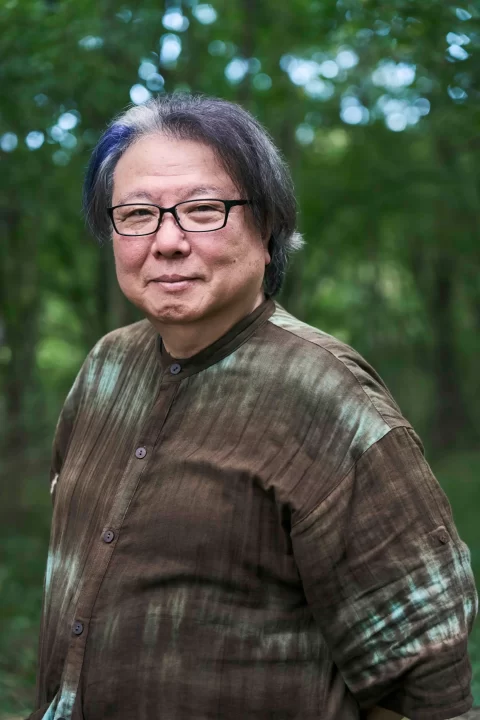
Takashi Kokubo
Born in Tokyo in 1956 and currently residing in Yamanashi Prefecture, he is an ambient musician and sound designer. Since the 1980s, he has been releasing his own solo works and has also undertaken a wide range of commissioned work, including ambient music for Roppongi Hills Arena and the sound logo for Yokohama City.
Website
https://www.studio-ion.com/takashikokubo
IG: https://www.instagram.com/takashi_kokubo/